The GEO Checklist: How to Optimize Your Website for
AI Search Visibility
What Is GEO?
GEO, or generative engine optimization, is the process of improving how your brand appears in AI-generated search answers.
Traditional SEO focuses on helping your website rank in search results. GEO focuses on helping AI search tools understand your business well enough to mention, summarize, recommend, or cite it when people ask relevant questions.
GEO does not replace SEO. Strong technical SEO, helpful website content, clear service pages, and local visibility still matter. But now, your content also needs to be structured for longer, more conversational searches.
Why a GEO Checklist Matters
Search behavior is becoming more question-based. People are not only searching for short phrases like “marketing agency near me.” They are asking detailed questions.
That kind of search requires more context. AI-powered search tools need to understand who you serve, what you do, where you operate, what makes you credible, and how your services solve specific problems.
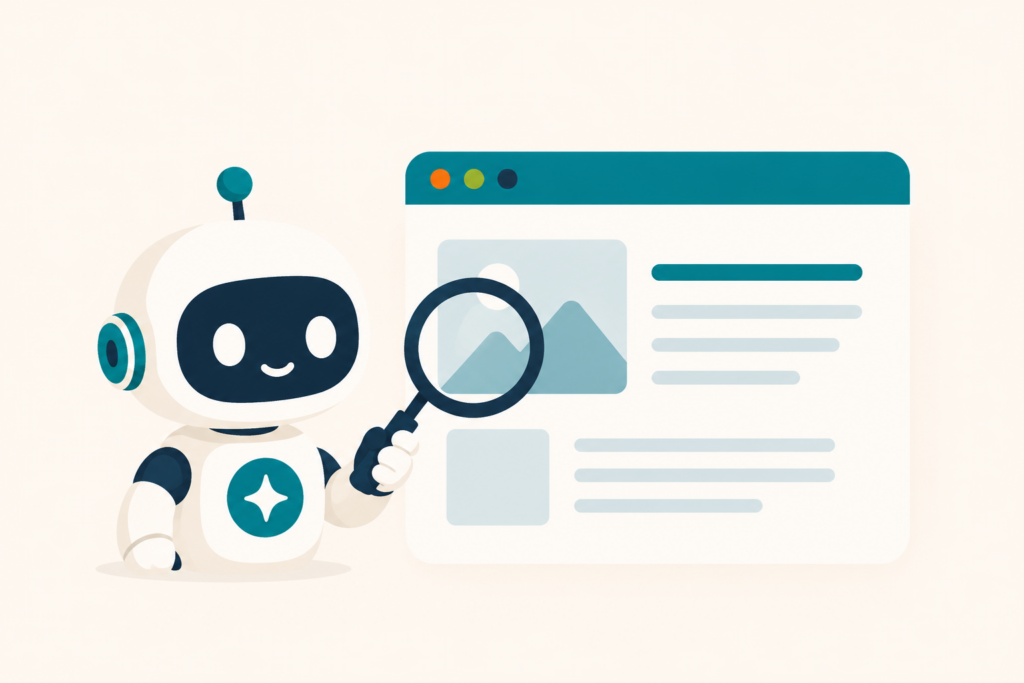
Quick GEO Checklist
Use this checklist to review your website:
- Your homepage clearly explains what your business does.
- Your content answers real customer questions.
- Your pages include direct definitions and concise explanations.
- Your website includes testimonials, reviews, case studies, or other proof.
- Your business information is consistent across the web.
- Your content uses examples, FAQs, comparisons, and checklists.
- Your most important pages are reviewed and updated regularly.
- Your website is fast, mobile-friendly, and easy to navigate.
1. Clarify What Your Business Does
Your website should clearly explain your services, audience, location, and value. Be sure to use specific descriptions that explain what you actually offer.
2. Answer Real Customer Questions
AI search tools often respond to full questions, not just keywords. Your website content should include direct answers to the questions your customers are already asking.
Use these questions as blog topics, FAQ sections, service page headings, and supporting content.
3. Use Clear, Keyword-Rich Headings
The most effective business videos tend to fall into a few natural categories, and none of them require overproduction or complicated setups.
One great option is simple storytelling videos that show your process or environment in a real way. These help people understand what working with you actually looks like, which builds familiarity and trust over time.
Educational content also performs well, especially when it answers the kinds of questions your customers are already asking. These videos don’t need to be complex, they just need to be clear and useful.
Specificity is one of the strongest ways to improve both SEO and GEO.
4. Make Service Pages
More Specific
Thin service pages are harder for AI search tools to understand. A strong GEO-friendly service page should explain:
- Who the service is for
- What problem it solves
- What is included
- How the process works
- What results or outcomes matter
- Why your business is qualified to provide it
- What the next step should be
Specificity is one of the strongest ways to improve both SEO and GEO.
5. Include Proof and Credibility Signals
AI search visibility depends partly on trust. Your website should include credibility signals that show your business is reliable.
Useful proof points include:
- Case studies
- Client testimonials
- Reviews
- Industry experience
- Certifications and Awards
- Press mentions
6. Keep Your Business Information Consistent
GEO is not limited to your website. AI tools may also use information from business profiles, directories, reviews, social platforms, and third-party mentions.
Make sure your business information is consistent across:
- Google Business Profile
- Industry directories
- Review platforms
Good GEO starts with a website that works well for real users.
7. Use Examples, Comparisons, and Checklists
AI search tools are better able to interpret content when it is clearly organized. Practical formats work especially well.
Use:
- Step-by-step lists
- Checklists
- Definitions
- Comparisons
- Examples
- FAQs
- “What to do next” sections
These formats make your content easier to extract, summarize, and reuse in answer-style results.
8. Improve Page Experience
GEO still depends on strong website fundamentals. If your website is slow, hard to navigate, or poorly structured, your content may be less effective.
Make sure your website has:
- Fast page speed
- Mobile-friendly design
- Clear navigation
- Descriptive page titles
- Optimized meta descriptions
- Proper image alt text
- Clean internal linking
- Easy-to-read formatting
Good GEO starts with a website that works well for real users.
The Bottom Line
GEO is becoming an important part of digital marketing because people are using AI-powered tools to research, compare, and choose businesses.
The brands that perform best in AI search will be the ones with clear content, strong credibility, consistent information, and useful answers to real customer questions.