
How to Build Cite-Worthy Content
for AI Search
For years, digital marketers focused on earning the click: rank for the right keyword, write a strong title, and persuade the searcher to visit the website. That model is changing.
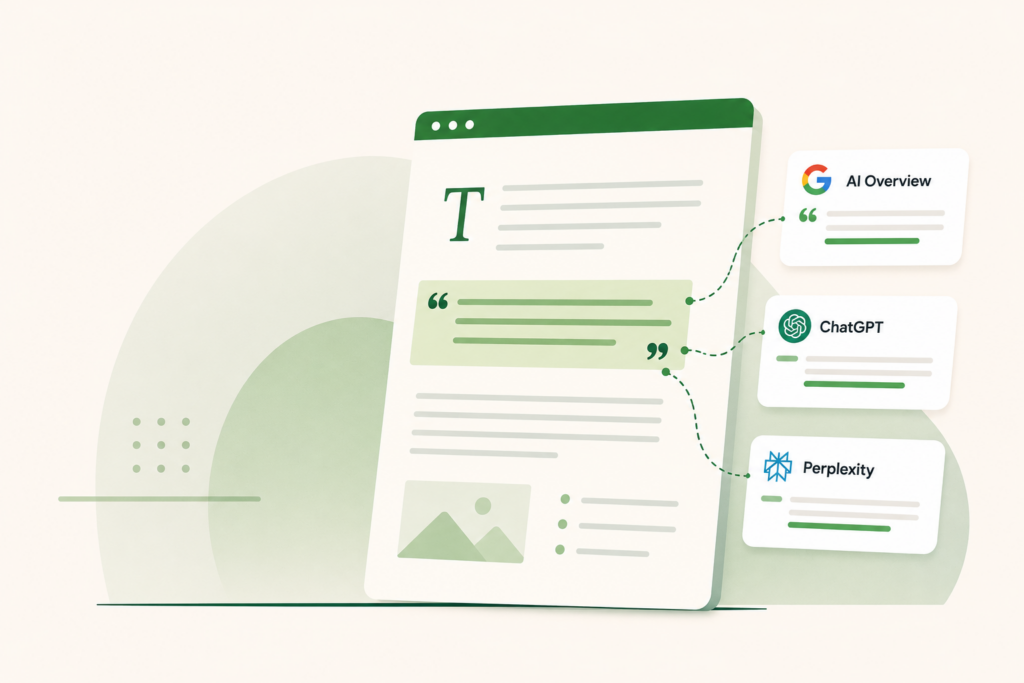
Google’s AI Overviews and AI Mode, ChatGPT search, and other answer engines can synthesize information from several sources directly within the search experience. The user may receive a recommendation, comparison, definition, or set of instructions before deciding whether to open another page.
To earn visibility in AI-assisted discovery, your pages must be easy to understand, well supported, and useful enough to become a source.
What Is Cite-Worthy Content?
Cite-worthy content gives a search or answer engine a clear, credible passage it can use to answer a specific question.
It usually combines five qualities:
- A direct answer that does not require extra interpretation
- Supporting evidence or firsthand experience
- Clear authorship and expertise
- Logical formatting and descriptive headings
- Original value beyond what already appears across competing pages
This is closely related to generative engine optimization, or GEO. However, it does not replace traditional search engine optimization.
Google’s guidance says that the same foundational SEO practices used for conventional search also apply to its AI features. Pages still need to be crawlable, indexed, eligible to appear with a snippet, and supported by accurate structured data where appropriate. Google also says there is no special AI schema or separate AI text file required to appear in these experiences.
In other words, strong technical SEO helps an engine access the page. Cite-worthy content gives it a reason to use the page.
1. Start With a Question, Not Just a Keyword
Traditional keyword research remains useful, but cite-worthy content begins with the question behind the query.
Before drafting a page, identify:
- Who is asking the question?
- What decision are they trying to make?
- What would a complete answer need to include?
- Which follow-up questions are likely to come next?
- What can your business contribute that is not already obvious?
A page can target a broad search theme while organizing each section around a specific reader question.
2. Put the Direct Answer Near the Top
Do not make readers excavate the main point from a long introduction.
When a section poses a question, answer it immediately in one or two clear sentences. Add explanation, examples, qualifications, and supporting detail afterward.
AI search does not eliminate the need for high-quality websites. It raises the standard for what deserves attention.
3. Add Information Only Your Brand Can Provide
Rewording the same advice found on dozens of competing websites creates little reason for an AI system, journalist, prospect, or industry peer to reference your page.
Original value can come from:
- Anonymized patterns observed across client projects
- A documented process used by your team
- Before-and-after examples
- Original research or survey findings
- Expert commentary with a named author
- Screenshots, demonstrations, or templates
- Clear explanations of where common advice fails
- Recommendations tailored to a specific industry or business size
You do not need a large national study for every article. A useful firsthand observation can be valuable when its scope is described honestly.
4. Build a Page That Is Easy to Interpret
Content structure helps readers, search engines, and answer systems understand which passage addresses which question.
A strong article should generally include:
- One descriptive page title
- A concise definition or key takeaway near the beginning
- Headings that describe the subject of each section
- Short paragraphs focused on one idea
- Lists for genuine steps, criteria, or comparisons
- Descriptive internal links
- Relevant images with useful alternative text
- A conclusion that gives the reader a next action
Use tables when the reader needs to compare several options across the same criteria. Use numbered steps when sequence matters. Do not force every article into a formula, but make the relationships between ideas unmistakable.
5. Strengthen the Trust Signals Around the Answer
A well-written claim is more useful when readers can see why they should trust it.
Support important content with:
- A named author and relevant biography
- A visible publication or update date
- Links to original research and primary sources
- Clear distinctions between fact, opinion, and inference
- Specific examples rather than vague promises
- Accurate business and contact information
- A correction and refresh process for changing topics
Avoid citing another blog that merely summarizes a study when the original research is available. Primary sources shorten the chain between your statement and its evidence.
Trust also extends beyond the article itself. Broken pages, intrusive overlays, poor mobile layouts, and unclear ownership can weaken the experience surrounding otherwise useful information.
Make Your Website the Source
AI search does not eliminate the need for high-quality websites. It raises the standard for what deserves attention.
IMAGINE Agency helps businesses turn their expertise into purposeful content and websites built for modern discovery. Start by identifying the questions your customers genuinely need answered, then build the strongest source on your site.